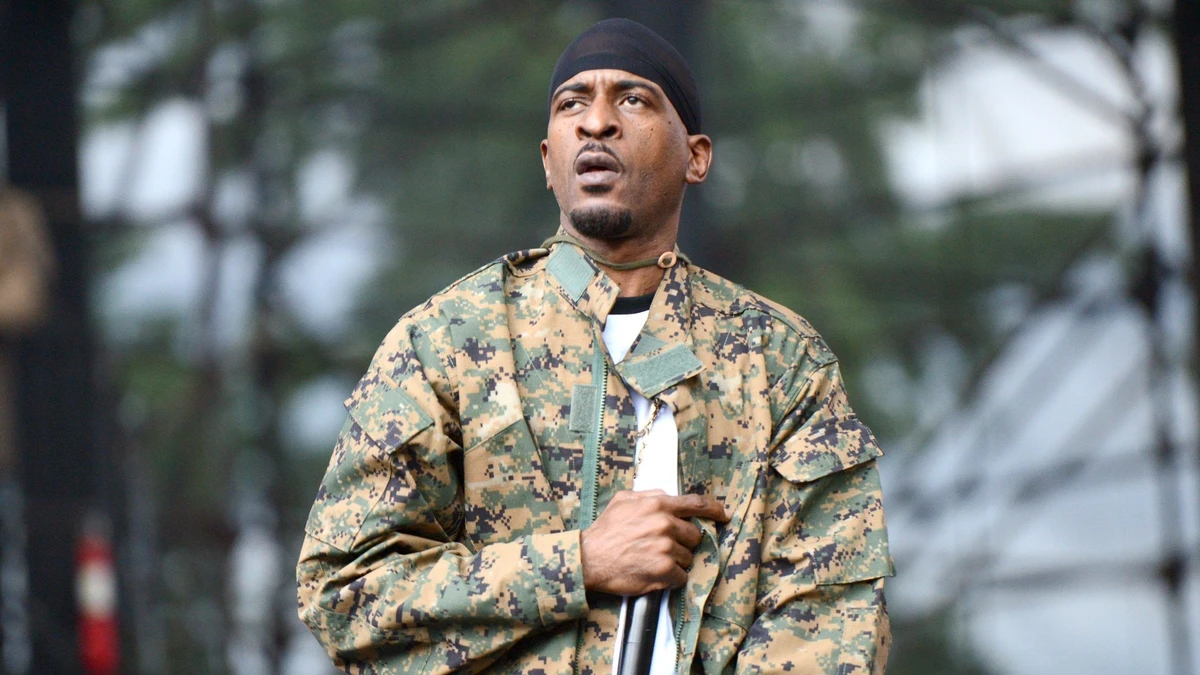

Ken Carson’s xperiment arrived on July 3, 2026, and it wastes little time reminding listeners why the Atlanta rapper has become one of rage rap’s biggest draws. Released through Opium, Playboi Carti’s Interscope-backed imprint, the album is Carson’s first full-length since More Chaos handed him his maiden Billboard 200 No. 1. It doubles down on the sound that got him there: distorted synths, seismic bass and a nonstop, adrenalised flow, this time spread across a sprawling 22-track runtime that has become the album’s biggest talking point.
A Rage-Rap Headliner Raises the Stakes
Ken Carson spent the back half of the 2020s climbing from Opium signee to arena-sized headliner. A Great Chaos in 2023 turned the distorted, mosh-pit energy of rage rap into a commercial force, and More Chaos pushed him over the top with a chart-topping debut at No. 1. That trajectory reframed the stakes for this release. Where earlier projects felt like a young artist sharpening a niche, xperiment lands as the work of an established name expected to define a lane rather than simply compete in it.
The title promises a departure. In practice, the record stays close to home. Carson tightens and amplifies the formula that built his audience rather than rebuilding it, a choice that shapes almost every response the album has drawn since release.
That decision reflects where he now sits commercially. An artist chasing a first hit can afford to gamble; a headliner defending a No. 1 has more to lose. Carson’s answer is to deliver more of what works, scaled up, and to let volume stand in for reinvention. It is a strategy with obvious upside and an obvious risk, and xperiment tests both at once.
Inside xperiment: 22 Tracks and a Wall of Producers
xperiment runs 22 tracks and stretches past the hour mark, a scale that says a great deal about how Carson and his team approached the project. Reporting around the release credits a staggering roster of roughly 48 producers, including scene favourite 2hollis, and the fingerprints show. Beats lurch and switch mid-song, synths curdle into distortion, and the low end is mixed to rattle a car or a festival stage in equal measure.
Lyrically, the album stays inside the world Carson has always mapped: money, luxury, women, drugs, fashion, rivals and the pressures that arrive with fame. He is not reaching for confession here, and he does not pretend to be. The appeal is momentum and atmosphere, the sense of a set that barely pauses for breath from its opening minutes to its final stretch. Whether 22 tracks is the right container for that energy is exactly where opinion divides.
The rollout matched the ambition. Carson trailed the album across a busy run of festival dates and singles that primed his base for another maximalist statement, and the release landed at the front of a stacked summer for rap. That timing matters. xperiment is not competing for attention in a quiet week; it is one of several heavyweight projects chasing the same streaming real estate, which raises the bar for how memorable an hour-long set needs to be.
The Guest List: Carti, Uzi and Young Thug
xperiment keeps its features tight and on-brand. Playboi Carti, Carson’s Opium labelmate and clearest sonic touchstone, turns up on “Deaf Note,” a pairing several reviewers singled out as one of the album’s peaks. Lil Uzi Vert appears on “Ghost,” trading the kind of weightless, melodic energy that first drew a bridge between his catalogue and the rage generation. Young Thug adds a verse on “drug kit,” a reminder of the Atlanta lineage that runs underneath the whole movement.
The guest choices reinforce a point the album keeps making. Carson is not looking outside his circle for validation. The features read as family rather than crossover bids, and for the audience he has built, that focus is part of the draw.
What the Critics Are Saying
Reception has landed in mixed-to-positive territory, with a clear split between praise for the production and frustration with the length. In its album review, RatingsGameMusic handed the record a grade of C, calling the production “consistently impressive” while noting there “aren’t many deeply introspective moments” and that the features feel like natural additions rather than forced collaborations.
Writing for his site, critic Anthony Stirford scored xperiment a 6/10 and framed the central tension bluntly, describing it as “potentially the best rage rap album of the year” that is nonetheless buried by bloat. “If Carson had trimmed the excess down to a focused 12-to-15-track masterwork,” he wrote, “this would be an absolute masterpiece.” Aggregated scores tracked on Album of the Year sit in a similar range, with several publications landing near the midpoint and repeating a shared observation: for a project called xperiment, the record stays firmly in its established rage-rap lane.
The Length Debate: Maximalism Versus Cohesion
The strongest thread running through the coverage is runtime. Critics who admire the sound of Ken Carson’s xperiment still argue that a tighter edit would have served it better, pointing to a back half where filler dilutes the impact of the strongest cuts. Highlights that reviewers returned to, among them “Deaf Note,” “Ghost,” “EDM” and “Flamethrower,” tend to sit alongside tracks that add little beyond volume.
The runtime question is also an economics story. In a streaming market that counts every play, long tracklists can lift an album’s opening-week numbers even when they thin out the listening experience, and few artists in Carson’s lane have resisted that pull. Reading xperiment purely as bloat misses the commercial logic; reading it purely as strategy ignores the fans who simply want the mosh-pit energy to keep going. The honest verdict sits somewhere between the two, which is where most of the coverage has landed.
It is a familiar debate in a streaming era that rewards long tracklists, and it is one rap has been having with itself for years. RapStar.News recently explored the opposite instinct in a look at how Zxonn’s K# album reclaims hip-hop as a cohesive, seamless statement, a reminder that the front-to-back album is still a live artistic choice rather than a relic. Against that backdrop, xperiment reads less as a misstep than as a deliberate bet on abundance, one that will reward some listeners and exhaust others.
Where Ken Carson’s xperiment Lands in 2026
For all the debate, xperiment cements Carson’s status at the front of a subgenre that shows no sign of cooling. Rage rap has moved from the underground to the mainstream on the strength of exactly this kind of high-energy, production-forward release, and Carson remains one of its most bankable names. The album gives his live show a fresh arsenal of drops and beat switches, and it keeps the Opium sound in the conversation as the summer’s release calendar fills out.
The measured verdict is that Ken Carson’s xperiment succeeds on its own maximalist terms while inviting a real question about editing and ambition. Fans looking for the next chapter of the rage era will find plenty to move to. Listeners hoping the title signalled a genuine left turn may leave wanting. Both readings can be true at once, and that tension may be the most interesting thing about the record.
About Author