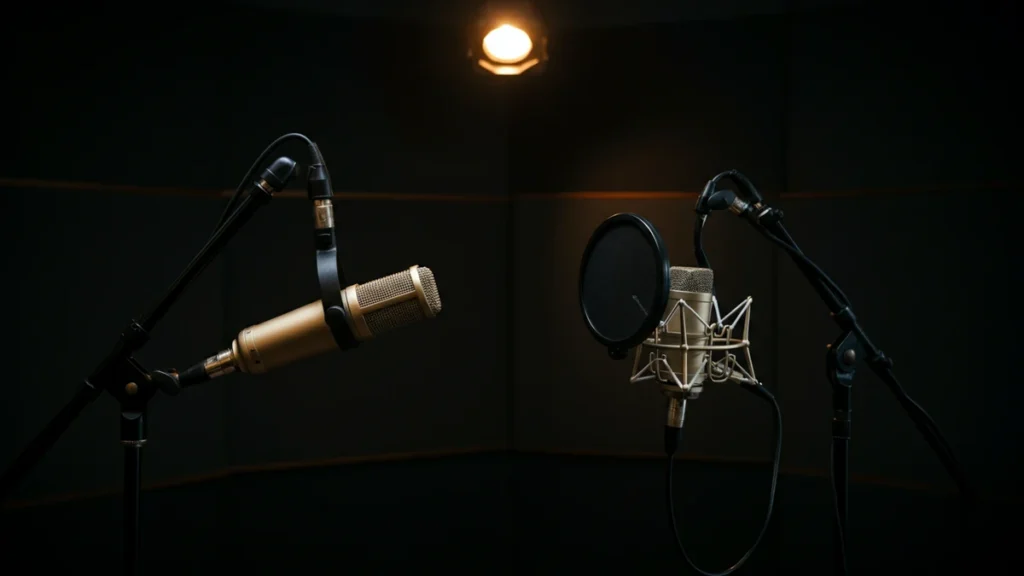
Two studio microphones in a dimly lit recording booth under a warm overhead spotlight. | RapStar.News - AI Generated
The Spark That Ignited the Fire
The historic Drake vs. Kendrick Lamar feud didn’t start in 2024, but it certainly reached its explosive apex. While tensions have simmered for over a decade, with subliminal disses traded on various tracks, the conflict erupted into a full-blown lyrical war following the release of Future and Metro Boomin’s track “Like That” in March 2024. On the song, Kendrick Lamar directly rejected the notion of a “big three” in rap (consisting of himself, Drake, and J. Cole), famously declaring, “it’s just big me.” This single line was the declaration of war the hip-hop world had been anticipating. It set the stage for a series of releases that would dominate music, culture, and conversation for months.
A Barrage of Diss Tracks: The Chronology of Conflict
Following Lamar’s salvo, the battle unfolded in a rapid-fire exchange of diss tracks, each more pointed and personal than the last. Drake, one of rap’s biggest titans, was the first to respond, leading to a quick succession of releases that captivated and shocked the world:
- Drake’s Opening Salvo: In April 2024, Drake fired first with “Push Ups,” a track taking aim at Lamar’s stature and career choices. He followed up with the controversial “Taylor Made Freestyle,” which used AI-generated vocals of Tupac and Snoop Dogg to taunt Lamar. This move backfired when Tupac’s estate threatened legal action, forcing its removal.
- Kendrick’s Seismic Rebuttal: Lamar’s response began on April 30 with “Euphoria,” a nearly seven-minute epic dissecting Drake’s character. He followed this just days later, on May 3, with “6:16 in LA,” which hinted at an informant in Drake’s camp.
- The Final, Intense Volley: The conflict peaked over a stunning 24-hour period. Drake dropped “Family Matters,” which included accusations of domestic abuse against Lamar. Less than an hour later, Lamar retorted with the dark and psychological “Meet the Grahams,” which leveled devastating accusations at Drake. Lamar then released “Not Like Us” on May 4, a track that became an instant cultural anthem. Drake’s final reply, “The Heart Part 6,” was largely seen as an attempt at damage control.
Accusations That Crossed the Line
This was not a typical rap battle focused on lyrical skill or chart success. The Drake vs. Kendrick Lamar feud quickly descended into a deeply personal and dark territory. Lamar’s tracks, particularly “Meet the Grahams” and “Not Like Us,” leveled serious allegations of sexual misconduct and pedophilia against Drake. He framed Drake as a predator, using the cover art for “Not Like Us” to show a Google Maps image of Drake’s Toronto mansion dotted with markers typically used for registered sex offenders. Drake, in turn, accused Lamar of infidelity and domestic abuse against his fiancée, Whitney Alford. These were no longer just lyrical jabs. They were potentially career-ending, reputation-shattering accusations. The claims brought the artists’ private lives into the public arena in an unprecedented way. The severity of the claims led to widespread discussion about the boundaries of diss tracks and whether a line had been crossed, with some legal experts noting the potential for defamation lawsuits.
Commercial Impact and Chart Domination
Beyond the lyrical warfare, the feud was a monumental commercial event. The conflict generated over $15.4 million in revenue from streaming and sales across just six of the charting diss tracks. Kendrick Lamar emerged as the clear financial winner, with “Not Like Us” alone generating an estimated $7.6 million. The track was a cultural and commercial juggernaut, debuting at number one on the Billboard Hot 100 and breaking numerous streaming records. It became the most-streamed hip-hop song in a single day on Spotify and also became the fastest hip-hop song to reach one billion streams on the platform. “Like That” also hit number one, giving Lamar two chart-topping singles from the beef. Drake’s tracks, while not reaching the same heights as Lamar’s, also performed well, with “Family Matters” and “Push Ups” each earning just under $1 million and securing top-ten chart positions. The feud completely dominated the music landscape, proving that in the streaming era, high-stakes drama is big business.
The Industry Reacts: A Divided Kingdom
The hip-hop community watched with a mixture of excitement and concern. Many artists and industry figures weighed in, with opinions largely divided. Some, like Jermaine Dupri, praised the feud for bringing a competitive fire back to the genre. Others, including Questlove and Ice Cube, expressed unease at the dark turn the accusations took. They warned that such public humiliation could lead to real-world violence. Rapper Boosie Badazz cautioned against celebrating the beef, reminding fans that such conflicts can have tragic consequences. The feud also drew in other artists, with Rick Ross notably siding with Lamar and releasing his own Drake diss, “Champagne Moments.” The intense back-and-forth created a palpable tension within the industry, forcing many to consider the long-term impact on the culture.
What’s Next for Hip-Hop?
The dust has settled, but the impact of the Drake vs. Kendrick Lamar feud will be felt for years to come. It has raised critical questions about the ethics of rap battles, the line between art and defamation, and the role of social media in amplifying conflict. Drake’s subsequent lawsuit against Universal Music Group, his own label, signals a potential shift. The suit was for their role in promoting “Not Like Us.” It suggests lyrical disputes may now be settled in the courtroom, not just the recording booth. While many critics and fans declared Lamar the victor, the battle has left both artists in a new landscape. It served as a stark reminder of hip-hop’s long history of historic rivalries while simultaneously pushing the boundaries of what is acceptable in a lyrical war. As a platform that covers the music industry with journalistic balance, RapStar.News notes this event marks a significant moment of change. It demonstrates how personal rivalries, commercial incentives, and modern media can converge. Ultimately, these forces can reshape the genre itself.
Join the Music Conversation
The music industry is constantly evolving, driven by innovation, competition, and culture. To stay ahead of the trends and be part of the ecosystem that empowers creators, explore the future of music. Join the community shaping what’s next.
Explore the MW3.biz Music Ecosystem
About Author

How LA Party Rentals and Cute Rave Outfits Add Energy to Rapstar Festival Sets