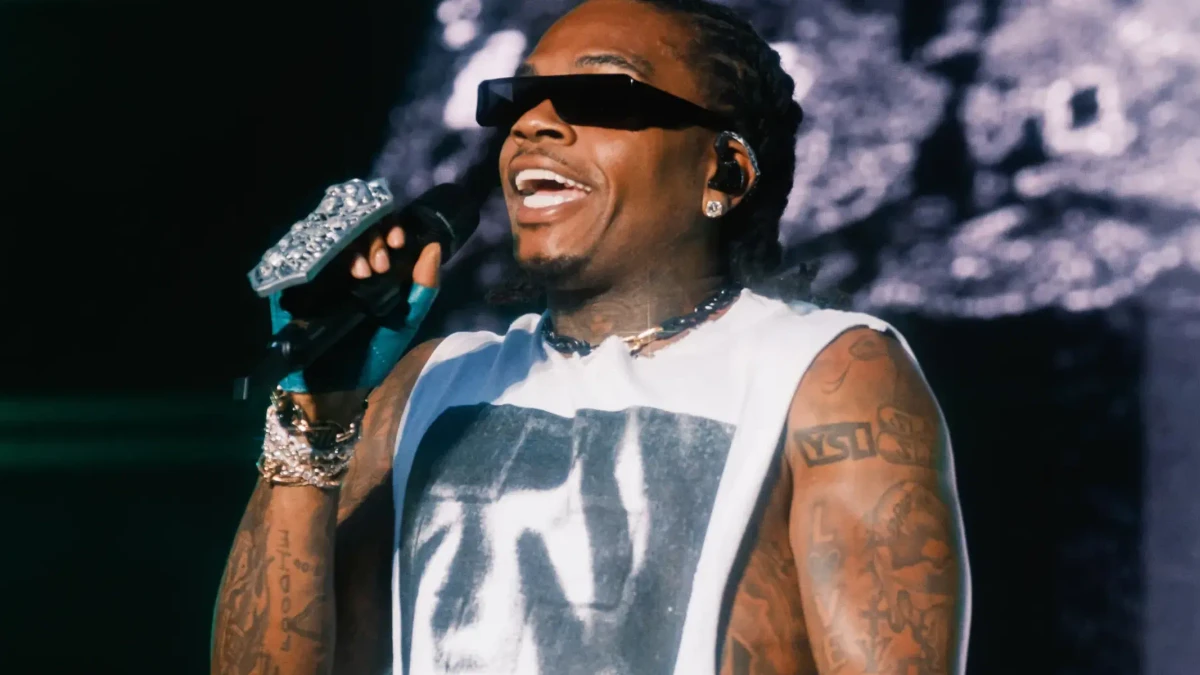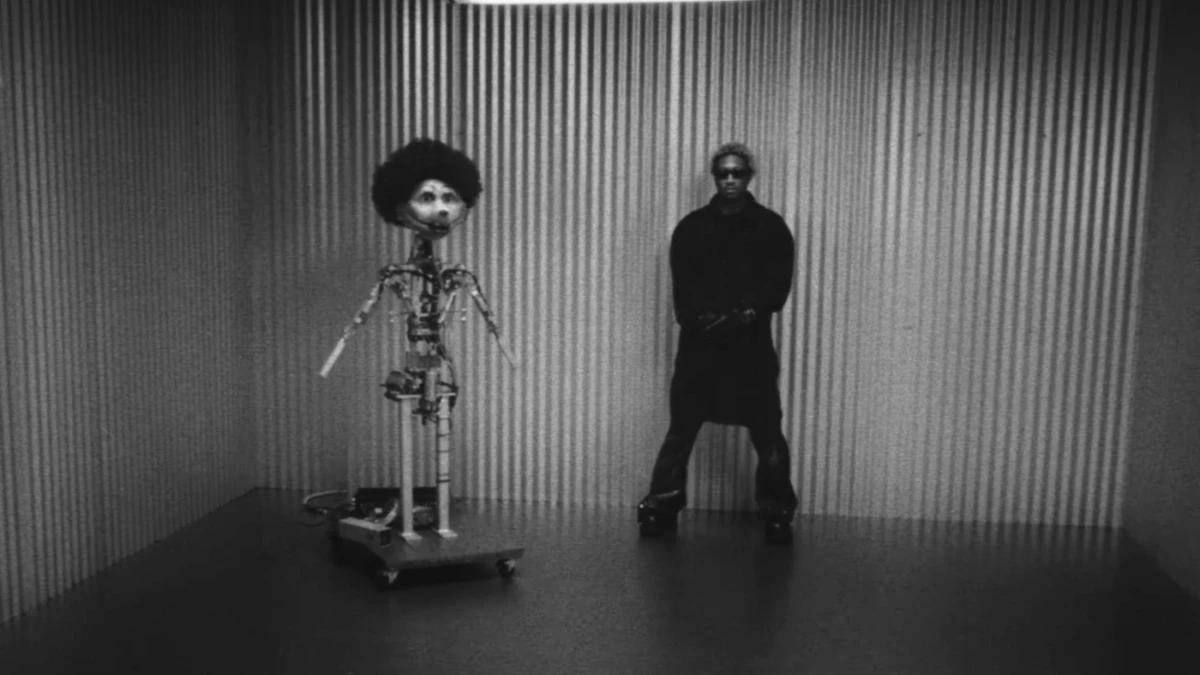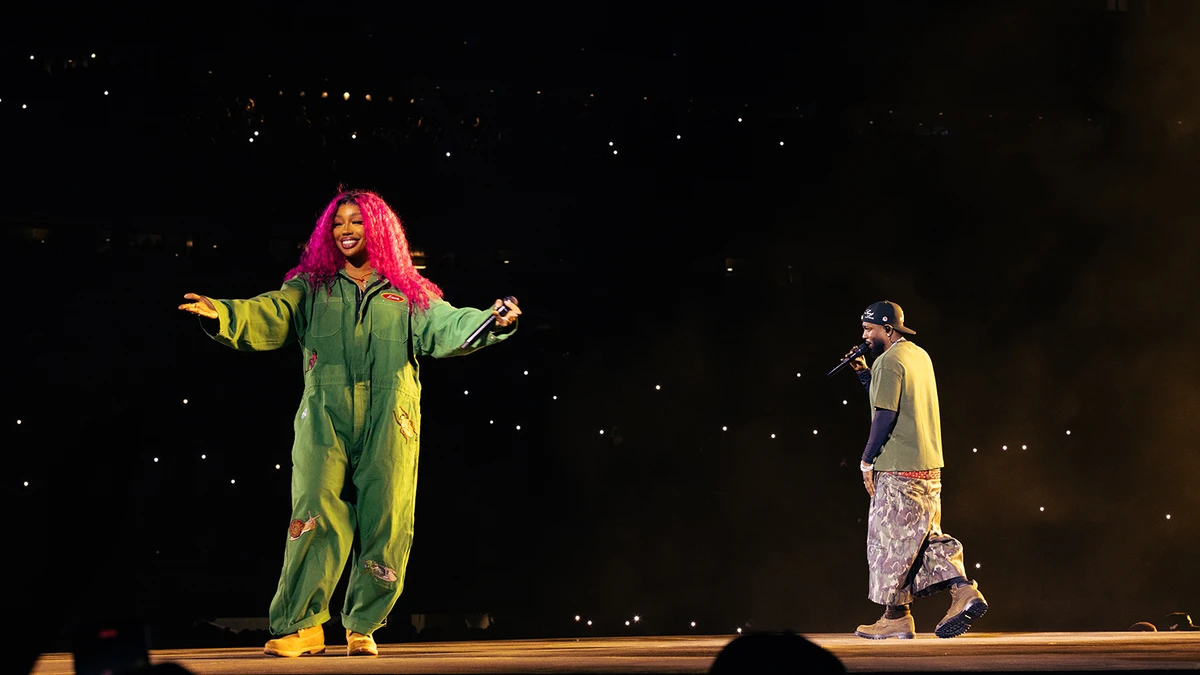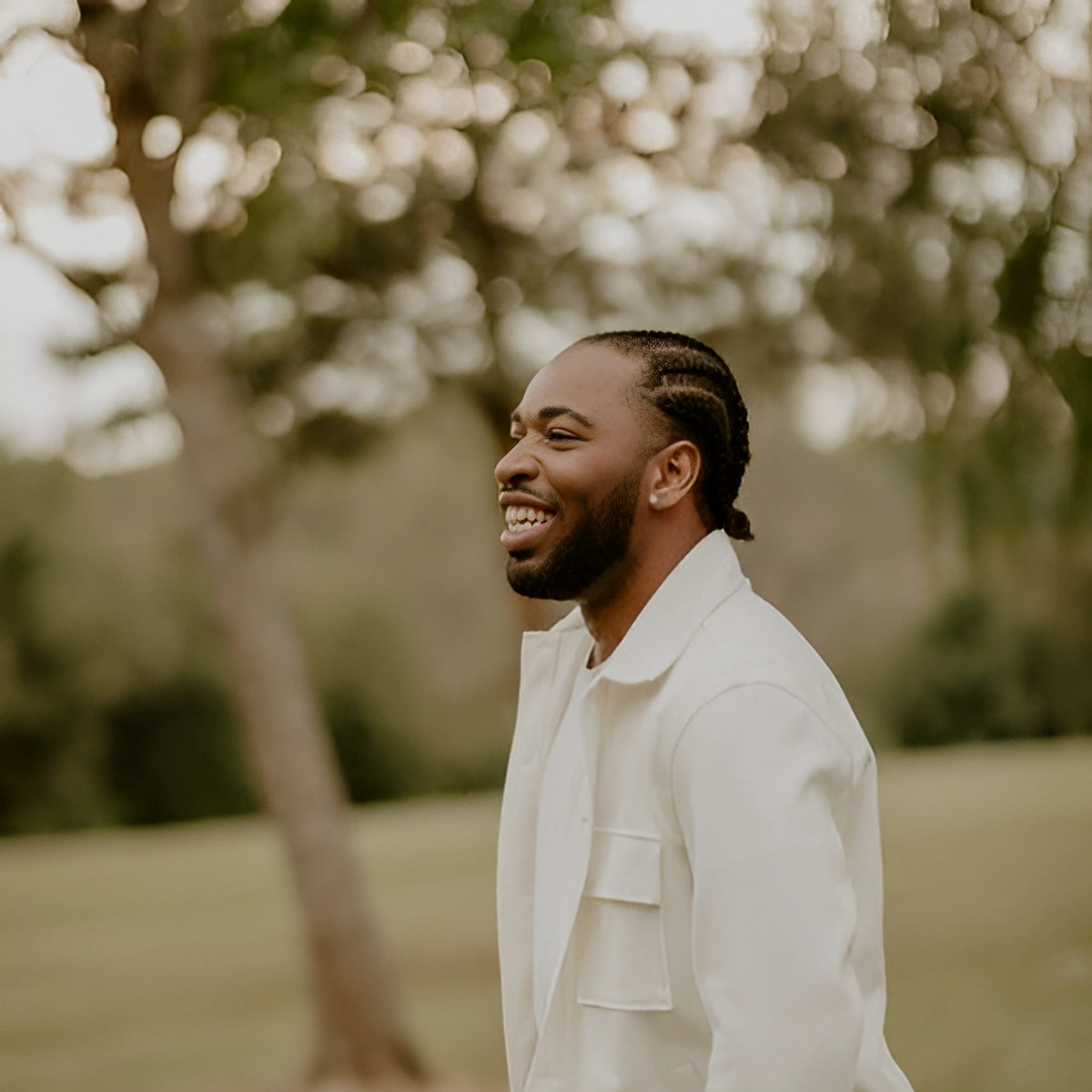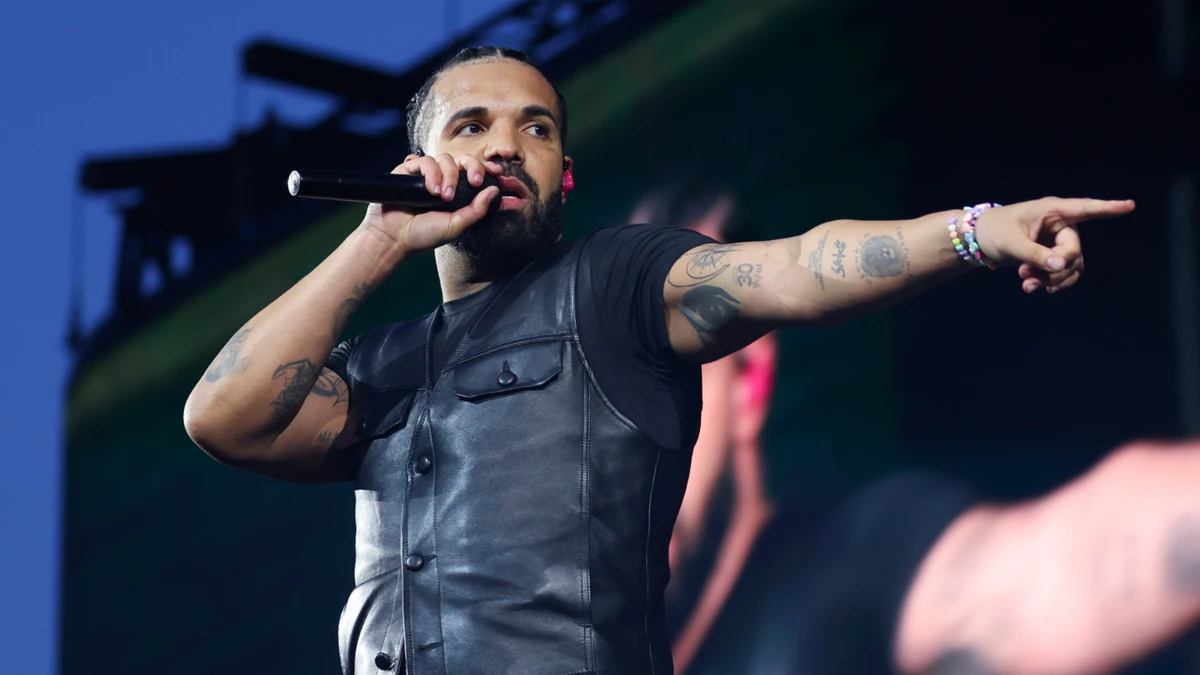

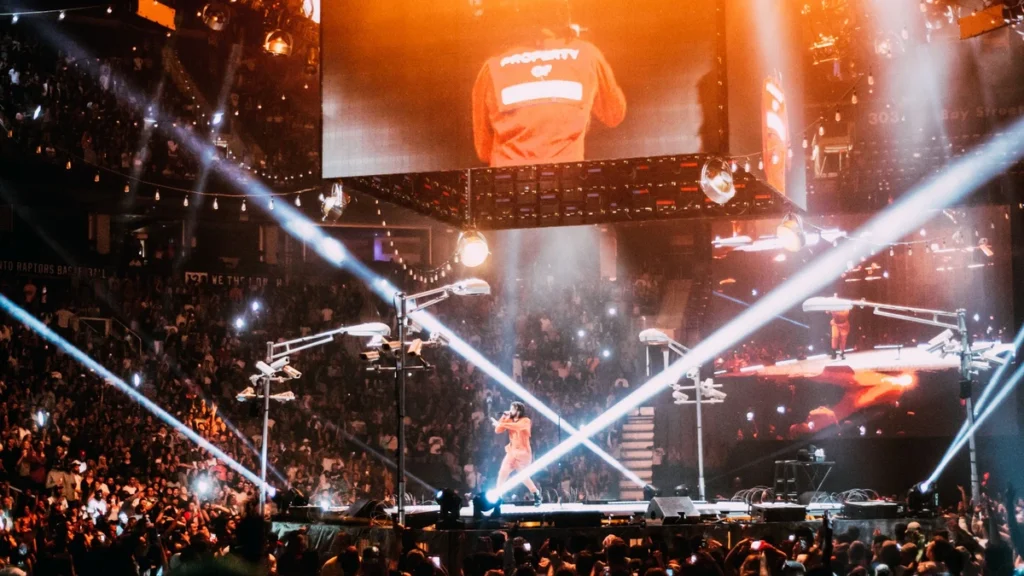
J. Cole performing in an arena in 2017
J. Cole performing in an arena in 2017
J. Cole brings the Fall-Off Tour to Manchester’s Co-op Live tonight, Wednesday 28 October, the penultimate stop of a UK leg that finishes at Nottingham’s Motorpoint Arena on Saturday. From there the run crosses to Europe, flies to Australia and New Zealand, and ends somewhere it has not been for a decade: Johannesburg’s FNB Stadium on 12 December, his first South African show in ten years.
That last date is the outlier. The Fall-Off Tour was announced as an arena run, and the finale is a stadium, a sign of the demand in a market he has not played for a decade.
A Tour Built Around the Album He Calls His Last
The tour exists to carry The Fall-Off, Cole’s seventh studio album, released on 6 February. It debuted at No. 1 on the Billboard 200, and all seven of his albums have now reached the top of that chart. He has said it will be the last album in his catalogue, which gives every show on this run an end-of-era weight that a normal album cycle would not have.
It is also his first solo headline tour in five years, since 2021’s The Off-Season Tour, and his first full global run since the 4 Your Eyez Only tour of 2017, according to Pollstar’s report on the announcement. Pollstar described the original plan as 50 cities across 15 countries, promoted by Live Nation, with the opening night at the Spectrum Center in Charlotte, North Carolina, on 11 July.
The North American leg closed on 23 September at the Crown Coliseum in Fayetteville, the North Carolina city Cole grew up in and still refers to as The Ville. Ending the home leg at home fits a tour that keeps pointing back to where he started.
How the American Leg Set Up the World Run
The North American run was built to show scale. Pollstar’s announcement listed three New York-area arenas, Madison Square Garden, UBS Arena and Barclays Center, alongside Atlanta’s State Farm Arena, four Texas cities in Austin, San Antonio, Dallas and Houston, and four California stops in Sacramento, Oakland, Los Angeles and Inglewood. Live Nation promoted the tour and United Talent Agency handled the booking.
The international routing was sketched from the start: the UK, Europe, Australia, New Zealand and South Africa all appeared in the February announcement, with the international artist presale opening on 18 February and general sale on 20 February. Live For Live Music counted more than 70 arena dates worldwide across those cities, because several of them get more than one night.
Those doubled nights are the clearest measure of demand. The UK and Ireland leg alone covers two nights at the O2 in London, Dublin’s 3Arena, Birmingham’s Utilita Arena, Glasgow’s OVO Hydro, Manchester and Nottingham. For a rapper who went most of a decade without a full world tour, the scale of the return is part of the story.
It also means the UK shows arrive with the set fully worked in. By the time Cole reached the O2 in October he had already played the North American leg from July to late September, so the running order, the crowd-work moments and the pacing of the hits had been tested night after night in front of American arena crowds.
What Happens When the Lights Go Down
The London shows set the template for the UK run. On 19 October, the first of his O2 dates and his first London performance in almost a decade, Cole did not appear on the main stage at all at first. He started in the bleachers, performing ’39 Intro’ in the middle of the crowd before making his way to centre stage, according to Mixtape Madness’s review of the night.
From there the set moved through ‘Poor Thang’, ‘WHO TF IZ U’ and ‘Bombs In The Ville/Hit The Gas’. The moment people were still talking about afterwards came on ‘Johnny P’s Caddy’, when Cole spotted a fan on the stage camera and handed him the verse. The fan, by the reviewer’s account, executed it to perfection.
The older songs carried the loudest reactions. The whole arena sang ‘Work Out’. ‘Wet Dreamz’ and ‘G.O.M.D.’ “almost took the roof off”, and ‘Love Yourz’ led into ‘No Role Modelz’, which drew the biggest reaction of the night, before a closing ‘Quik Stop’. Cole also took time to thank London for knowing the words and for supporting him since he first toured the city.
“J. Cole went above and beyond on Monday, bringing a slice of The Ville to south-east London,” the review concluded. Chicago rapper Mick Jenkins opened the show.
Why the Setlist Works in a Room This Size
Arena rap shows often lean on spectacle to fill space. The Fall-Off Tour does the opposite: it opens with the artist physically among the paying public, then builds the night around songs fans already know by heart. That makes it a show about the audience as much as the stage, which is how an MC who rarely plays the role of pop star can hold an arena.
It also explains the shape of the set. The crowd-work moments, a fan rapping a verse, a whole building on ‘Work Out’, depend on the catalogue rather than the production, and Cole has a catalogue deep enough to put ‘No Role Modelz’ late in the night without worrying about the energy dropping before it. For fans who have only seen him on festival bills or in clips, this is the version of the show that explains why his albums keep debuting at No. 1.
The bleachers opening matters for another reason. On a farewell album cycle, starting the night among the fans reads as a statement about who the run is for. Whether he repeats it in Manchester and Nottingham is part of the appeal for anyone holding a ticket.
Where the Fall-Off Tour Goes After Manchester
The UK leg finishes at Nottingham’s Motorpoint Arena on Saturday 31 October, after earlier stops in London, Dublin, Birmingham and Glasgow, according to Live Manchester’s listing of the UK and Ireland dates. Then the tour returns to the continent for five more arena nights:
- 5 November: Paris, Accor Arena
- 8 November: Hamburg, Barclays Arena
- 9 November: Copenhagen, Royal Arena
- 11 November: Stockholm, Avicii Arena
- 12 November: Oslo, Unity Arena
After a break the run picks up in Australia, at the Brisbane Entertainment Centre on 25 November, Melbourne’s Rod Laver Arena on 28 November and Sydney’s Qudos Bank Arena on 1 December. Auckland’s Spark Arena follows on 5 December, and the tour closes at FNB Stadium in Johannesburg on 12 December.
Why Johannesburg Is the Right Place to Finish
Closing a world tour in South Africa, and in a stadium rather than an arena, is a bet on a market that has waited ten years for him. FNB Stadium is the biggest venue on the itinerary, and finishing there turns the last night of what he has framed as his final album cycle into an event rather than another date on a list.
It also fits a pattern of rappers treating touring as the main event of an album cycle. On this site we have already covered how Kendrick Lamar grossed more in 47 shows than any rapper has in a year; Cole’s run is built differently, on arenas and crowd intimacy rather than stadium spectacle, until the very last night.
Tickets and What to Know Before You Go
General sale for the tour opened on 20 February through the official site, thefalloff.com, with an artist presale on 18 February for international dates and VIP packages sold through Live Nation’s VIP channel. For the remaining UK and European dates, check the official site and the venue’s own page for availability and resale rules before buying elsewhere, since arena tickets for a tour this size are a common target for secondary-market mark-ups.
Expect a long night. The London show ran from the bleachers opening to the ‘Quik Stop’ finale with the hits stacked late, so arriving after the support act still means catching the moments people film. For anyone who has followed Cole since Cole World, and especially for those who believe him when he says this is the last album, the Fall-Off Tour is the run to see while it is still on the road.
About Author