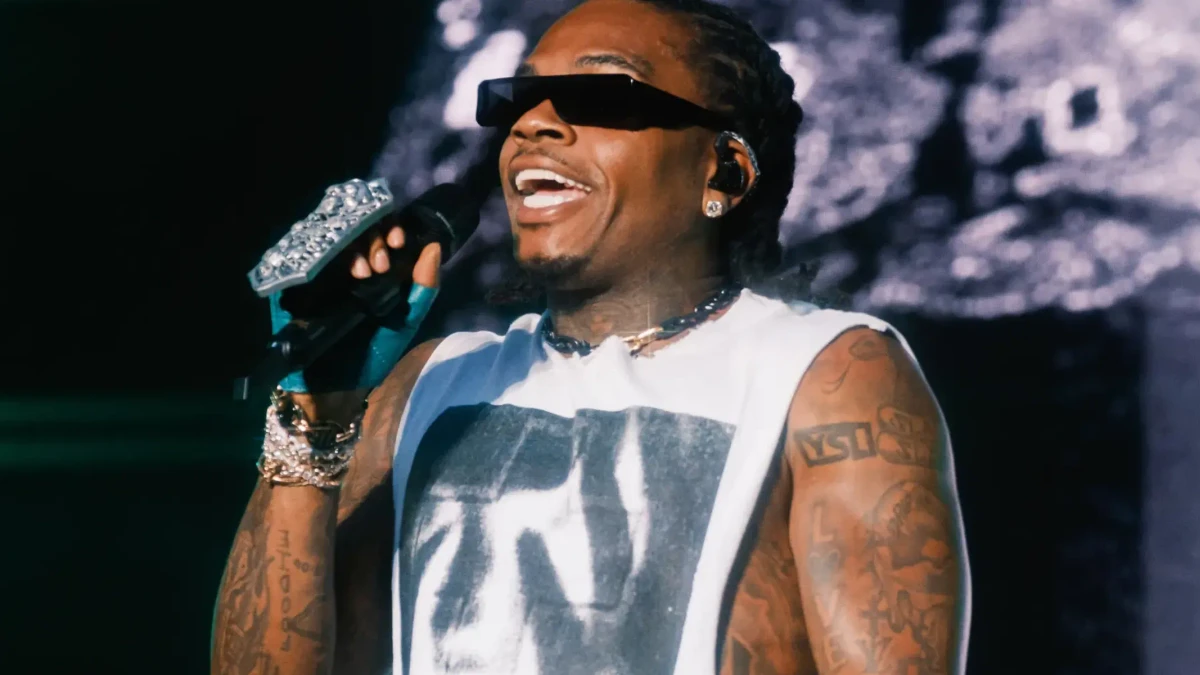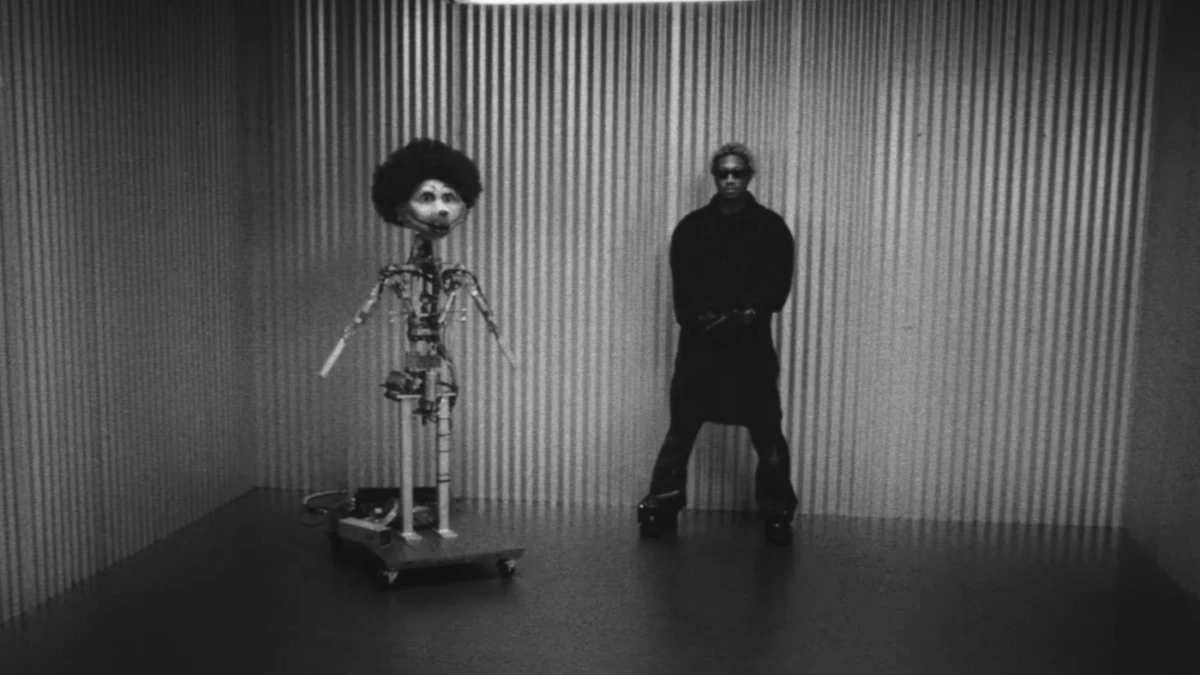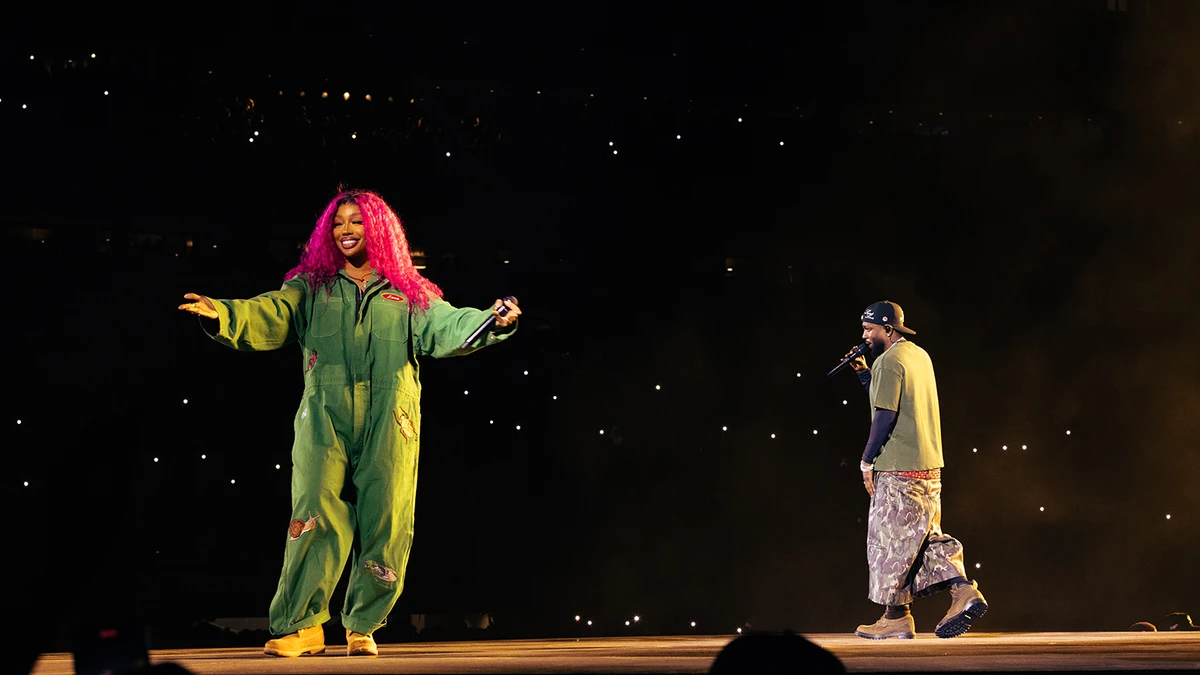

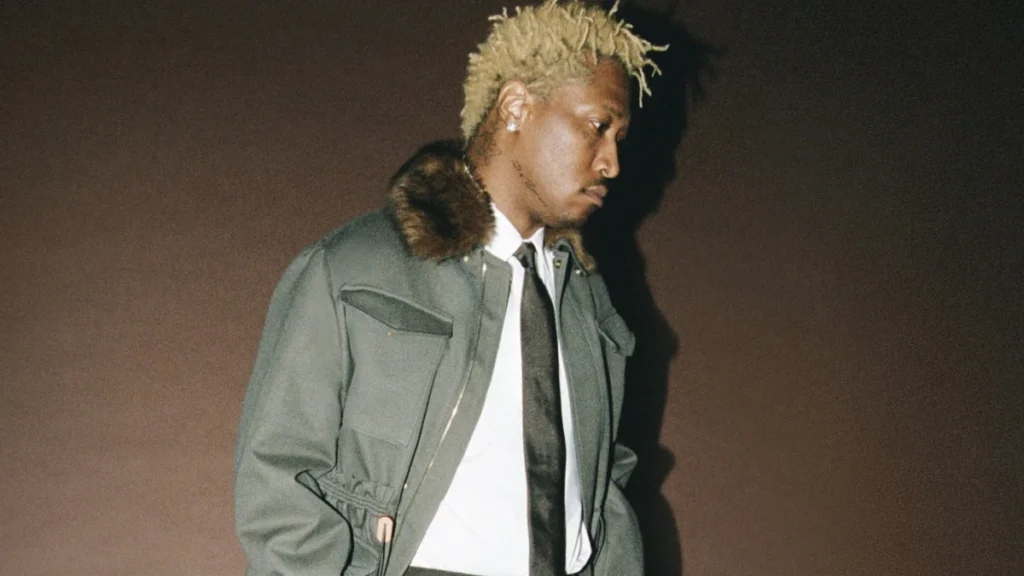
Most artists give a No. 1 album a year to breathe. Future gave his about three weeks, then went on Instagram and started talking about the next one.
On Sunday 2 August he posted to his Story: “Thanks for the #1 album. I’m always super grateful for the consistent love 1000% this next one for you.” The Real Me had been out for twenty-three days. It had already topped the Billboard 200, already banked his twelfth chart-topping album, and already moved him past a rapper most people assumed was untouchable on that particular list.
The Story That Started a Countdown
There is no title, no date and no artwork. What there is, is a working pattern. Future does not usually announce records years out; he lets the gap between one project and the next close until the announcement feels like an afterthought. A thank-you note that ends with “this next one for you” is, in his hands, closer to a release schedule than a sentiment.
It also lands differently coming from someone whose last rollout was deliberately compressed. There was no eighteen-month campaign for The Real Me, which makes a three-week turnaround to the next tease read as continuation rather than impatience.
The wording repays a second look, too. He leads with gratitude for the chart result, not with the result itself, and the promise at the end is framed as something owed rather than something announced. XXL noted the post the day it went up, and the reason it travelled is that it carries no information a marketing team would have approved: no title, no window, no artwork, just an artist telling his audience that the machine has not stopped.
What 131,000 Units Actually Bought Him
The Real Me debuted at No. 1 on the Billboard 200 dated 25 July, opening with 131,000 equivalent album units in the United States for the week ending 16 July, according to Luminate. The overwhelming majority of that came from streaming rather than sales, which is the shape almost every modern rap No. 1 takes.
The day-one numbers were the loudest part. The album pulled 23.8 million Spotify streams in its first day, the sixth-biggest opening day for a rap album in 2026 and the fifth-largest of Future’s own career. For an artist who has been releasing at this level for more than a decade, a personal top-five opening day is the more telling statistic of the two, because it says the audience is not merely still there but still growing. Those day-one figures also explain the shape of the week: streaming front-loads everything now, so the opening day effectively decides the chart position before most people have finished the album.
It is worth being clear about what 131,000 units is and is not. It is not a blockbuster number by the standards of the biggest pop releases, some of which open several times higher. It is a very strong number for a rap album with no features, no physical-heavy bundle strategy and a four-week campaign. Chart-topping in 2026 is less about raw scale than about who can convert a dedicated audience inside seven days, and few artists in any genre convert faster than this one.
Twenty-Two Tracks and Not One Feature
The record runs twenty-two tracks with no guest appearances. That combination is rare enough to be a statement. Long albums are usually long because features pad them out and because more tracks mean more streams counted toward the same total; doing twenty-two alone removes the second-most reliable lever an artist has for a big opening week.
It also puts the whole weight of the thing on one voice for well over an hour, which is a risk on paper and a flex in practice. Billboard’s chart report confirms the opening figure held up regardless, so whatever the feature list would have added was not needed.
The Rollout Almost Nobody Clocked
The campaign was short and strange. The album was announced on 15 June, and the release date followed ten days later. Lead single “Radio” arrived on 26 June and went on to reach the top twenty-five of both Hot Rap Songs and Hot R&B/Hip-Hop Songs. From announcement to release was under a month.
Before any of that, in January, he had floated the project and asked fans to help name it, and Spotify billboards carrying only the initials “T.R.M.” went up in June. It is a rollout built for people already paying attention rather than for people who needed convincing. Teasers that do heavy lifting are having a run in hip-hop right now, and the fifty million views a Cardi B teaser drew earlier this month came from the same playbook of letting anticipation carry the launch.
Where Twelve No. 1s Puts Him
Twelve chart-topping albums makes Future the rap act with the third-most No. 1s in Billboard 200 history. He passed Eminem, who sits on eleven. Ahead of him are JAY-Z with fourteen, Drake and Taylor Swift tied on fifteen, and The Beatles on nineteen across all genres.
Two of those twelve came in a single year from collaborative albums with Metro Boomin, both of which went to No. 1 in 2024. That is worth stating plainly rather than treating as an asterisk: part of how the tally grew so fast is a willingness to release in formats other artists treat as side projects, and to release them often.
The company he is now keeping on that list is instructive. The three acts ahead of him built their totals across long careers with famously wide crossover audiences. He has built his almost entirely inside one genre, without a signature pop crossover single of the kind that usually carries an artist to those numbers, and largely on the strength of volume plus a listener base that shows up in the first seven days every single time.
Why the Gaps Keep Getting Shorter
The strategic logic is not complicated. In a streaming economy, catalogue depth compounds, and every new release drags the back catalogue up with it. An artist with a dozen No. 1 albums and a decade of playlist real estate earns more from releasing frequently than from protecting a single body of work with a long silence.
Future has been the clearest example of that thesis for years. He does not treat an album as a monument to be defended for two years; he treats it as one release in a sequence. Announcing the next project before the current one has finished its chart run is not a mistake in that model. It is the model.
What the Next One Is Likely to Look Like
Nothing has been confirmed, so anything specific would be invention. What the recent pattern supports is narrower and more useful: expect a short announcement-to-release window rather than a long campaign, expect the first real signal to be a single rather than a date, and do not assume the length or the absence of features carries over, because The Real Me was unusual on both counts even by his standards.
The one thing already established is the appetite. Twenty-three days after a No. 1 debut, an artist twelve chart-toppers into his career is telling the audience there is more coming, and the audience has given him no reason at all to slow down. Future has spent his whole career betting that the next record matters more than the last one, and this month he collected on it twice.
This article was AI-assisted and edited for accuracy.
About Author