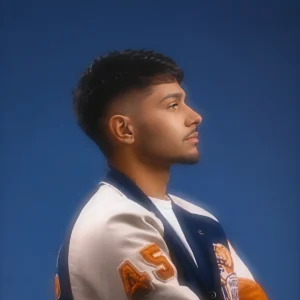

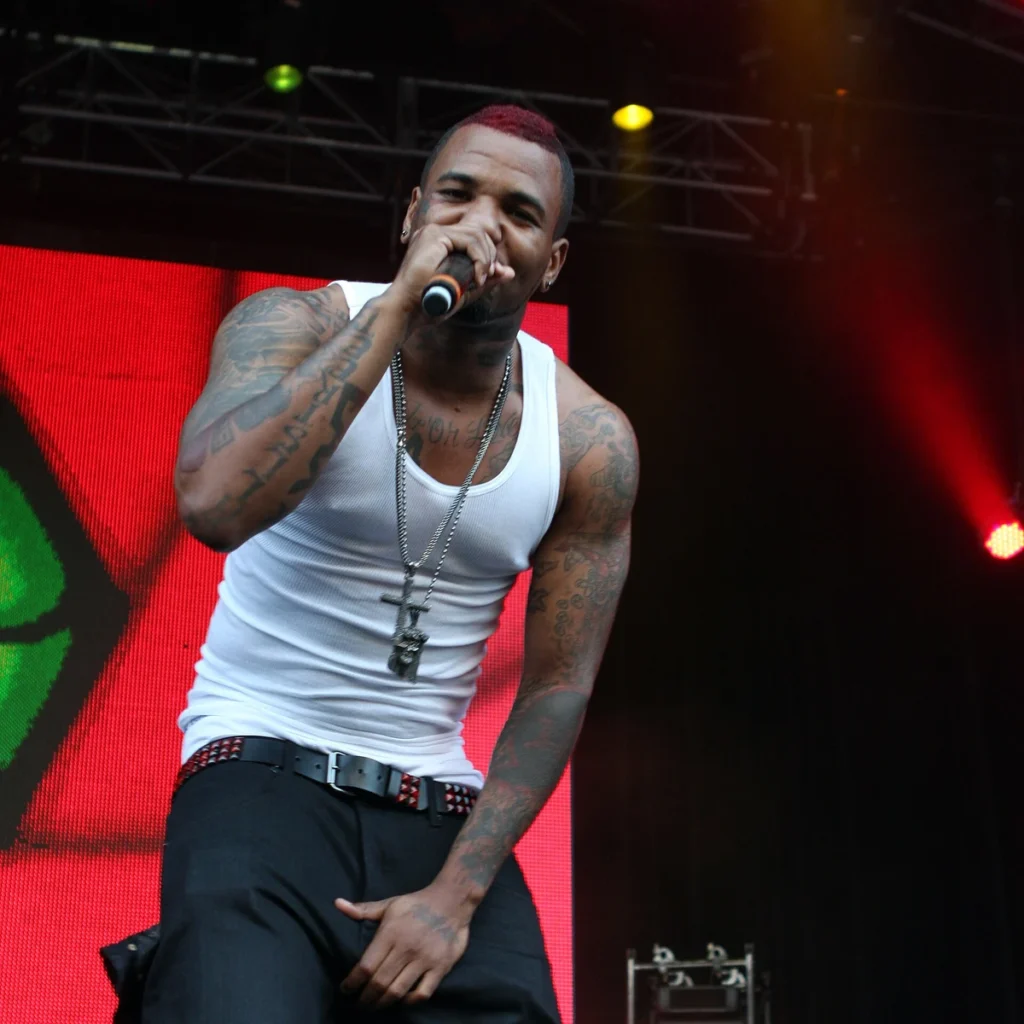
The Game on stage. His third Documentary album arrived overnight with no rollout and a Drake hook attached.
The Game on stage. His third Documentary album arrived overnight with no rollout and a Drake hook attached.
The Game closed his trilogy without warning. The Documentary III appeared overnight on Friday, a sprawling 24-track record that arrived with no rollout and immediately gave rap discourse the thing it had been circling for months: a straight answer, or at least the closest thing to one, about where he stands between Kendrick Lamar and Drake.
The answer is not tidy. Across the album he denies having a problem with Kendrick at all, and simultaneously makes it obvious whose corner he is standing in.
Announced on a Thursday, Out by Midnight
The rollout was barely a rollout. On Thursday evening The Game posted the cover art to Instagram and told followers the record would hit streaming platforms at 9pm Pacific and midnight Eastern that same night, with a pre-save link and a run of exclamation marks. Complex reported the announcement as it landed, hours before the album did.
He also named the people who built it, which artists rarely bother to do in a surprise drop. He co-produced the album with Tommy Brown, Mike and Keys, and Travis Wilson; Treyvonce Moore mixed and mastered it; Jonathan Mannion, whose portraits have fronted rap albums for three decades, shot the cover. For a record that trades heavily on legacy, hiring Mannion is not a neutral choice.
In the caption The Game thanked the people who worked on it and the fans who had waited, framing the release as a reset rather than a comeback. Given how long the third Documentary had been promised, the distinction matters to him.
Drake Sang the Hook and Left the Verse Alone
The headline collaboration is “No Brakes,” and the interesting part is what Drake does not do on it. Rolling Stone noted that Drake supplies the hook but no bars, which is a deliberate piece of positioning by both men.
A hook is presence without commitment. Drake is unmistakably on the record, his voice is the part listeners will repeat, and yet he has said nothing that can be quoted back at him in a feud. The Game gets the co-sign; Drake keeps his powder dry.
It is also, for a Compton rapper in the current climate, a loud choice. Aligning with Drake at all is read on the West Coast as a statement, and The Game did not soften it.
The Beef He Says Does Not Exist
On “The Pen,” The Game addresses the rumour head on, rapping that people say he is beefing with Kendrick and asking, essentially, how that could possibly make sense. It is a denial delivered as a rhetorical shrug rather than a press statement.
He returns to it on “LA Monster.” There he says he has no problem with the man he calls the Boogeyman and that the feeling is mutual, before reasserting his own claim on the city. XXL noted that the two have never had a serious public falling out, and that the speculation grew from two things: his loyalty to Drake, and his long-standing insistence that he is the best rapper Compton has produced.
Both of those are positions about himself, not attacks on Kendrick. That distinction is what The Game appears to be defending.
A Torch Passed in 2011, and What Happened After
The history matters here, because the two were not always read as rivals. Fifteen years ago The Game stood alongside Snoop Dogg and other West Coast veterans for a ceremonial passing of the torch to a younger Kendrick Lamar. It was a public blessing, and it was not ambiguous.
Rolling Stone reports that relations have cooled considerably since, with figures in the wider TDE orbit hinting on podcasts and in interviews at friction that predates the Drake situation entirely. None of that has ever been stated outright by either principal, which is precisely why it has festered as rumour rather than resolving as a feud.
What changed is that the Drake conflict forced everyone in Los Angeles to be counted. The Game does not appear to accept the premise of the count.
The Verzuz Moment That Set This Up
The clearest preview came in July, during his Verzuz battle with YG. The Game performed “100,” his 2015 collaboration with Drake, and stopped to shout the Toronto rapper out in front of a Los Angeles crowd, adding that he was indifferent to how anyone in the room felt about it.
The staging sharpened the point. YG had been at Kendrick’s Pop Out concert, an event widely understood as a roll call of West Coast alignment. Performing a Drake song at YG and then praising Drake by name was not an accident of setlist order.
The Documentary III reads as the long-form version of that moment, with a budget and a guest list.
Who Else Is on the Record
The features run deep and skew veteran: Lil Wayne, Snoop Dogg, Ye, YG, Black Thought and Larry June among them, with further appearances scattered across the 24 tracks. Putting YG on the album weeks after their Verzuz is its own quiet statement that the disagreement is about Kendrick specifically, not about West Coast rap generally.
Elsewhere The Game turns the lens on himself, revisiting the sense that his catalogue has never been valued the way he believes it should be, and touching on Ye’s recent public statements. The self-assessment is characteristically unhumble, and characteristically specific about the records he thinks prove the point.
For a rapper twenty years into a career, the surprise-drop strategy is a bet that the conversation will do the marketing. On the evidence of the weekend, it worked.
The scale of the guest list also works as a defence. An artist genuinely at war with the most decorated rapper in Los Angeles does not typically fill his album with the elder statesmen of the region and the man he just battled. The Game has assembled a record that looks like consensus, then used it to say something that is not consensus at all.
What Actually Happens Next
Nothing about this is a diss record in the traditional sense. There is no named target, no dated ultimatum, no reply demanded. What there is instead is a veteran declining to pick the side he is expected to pick, and being loud about the friendship that makes it awkward.
Kendrick Lamar has said nothing. He may never say anything, and the smart money is that he does not, because responding would convert a rumour into a fact. The Game has spent the last month behaving as though the rumour is beneath him while making an album that engages with it repeatedly, which is its own kind of answer.
The commercial question is separate and simpler. A surprise 24-track album from a veteran is a difficult streaming proposition; there is a lot of it, and no single pushed to radio for months in advance. What it does have is a Drake feature, a news cycle, and a fanbase that has been waiting on this specific title for years. Whether that converts into a first-week number worth the wait will be visible soon enough.
Rap has plenty of these standoffs running at any given moment, alongside the steadier business of veterans measuring themselves in chart runs rather than in subliminals. This one is unusual because the denial and the provocation are on the same album, sometimes in the same verse.
This article was AI-assisted and edited for accuracy.
About Author