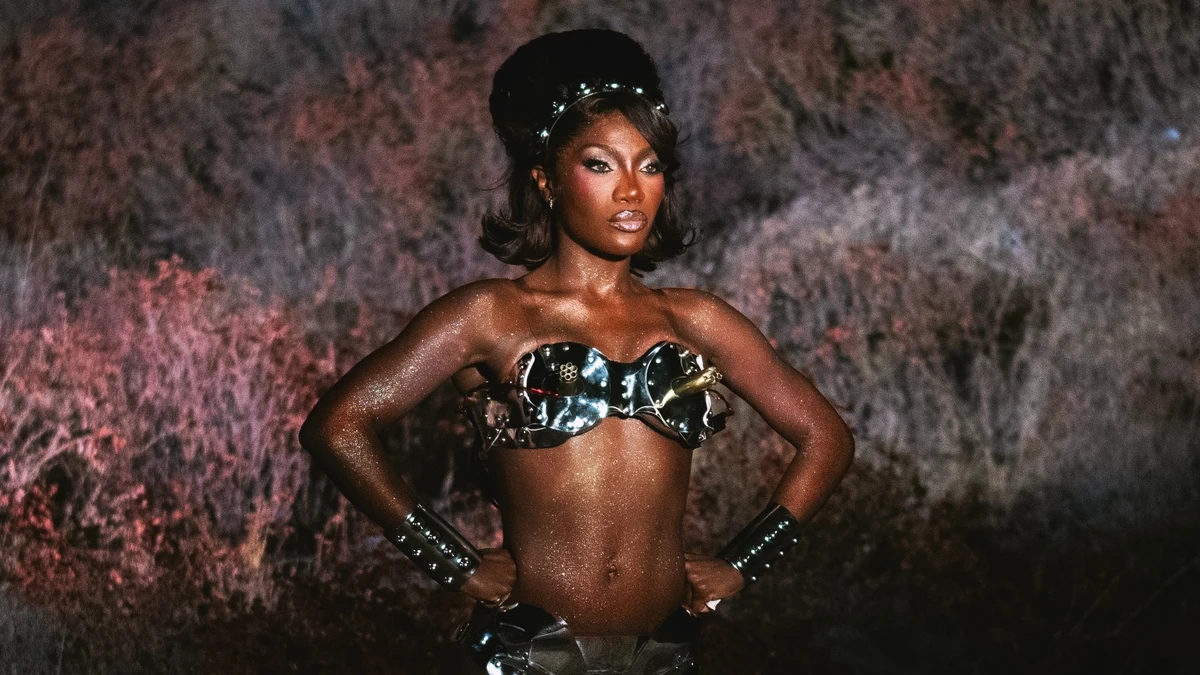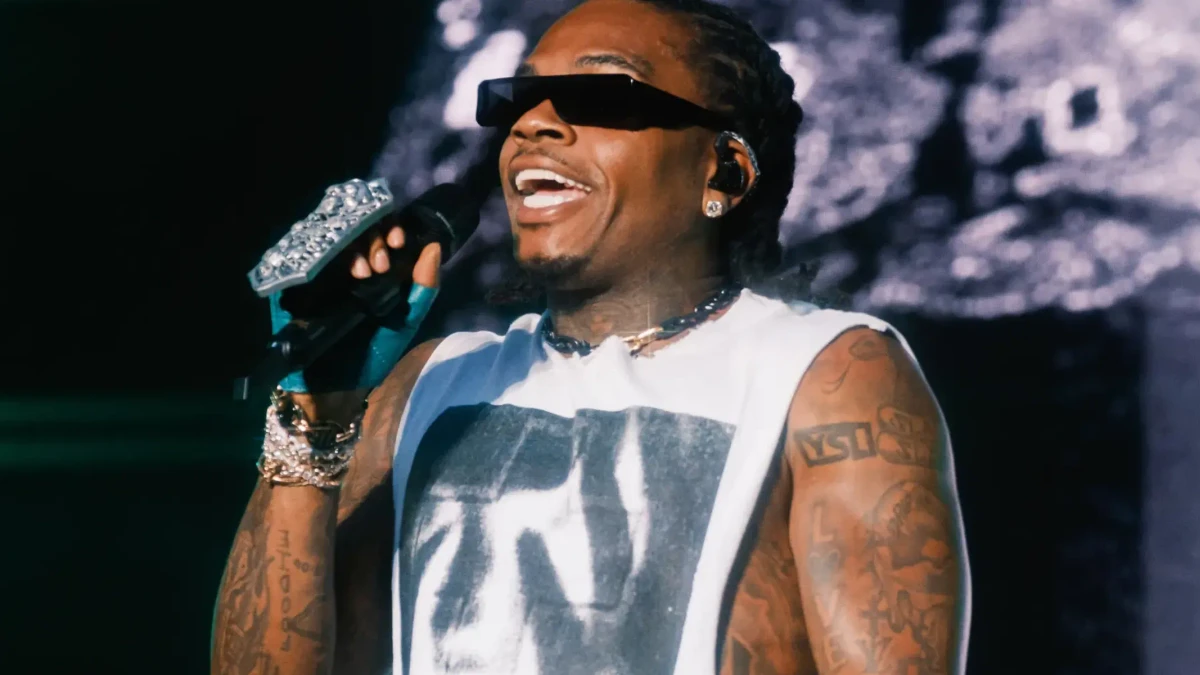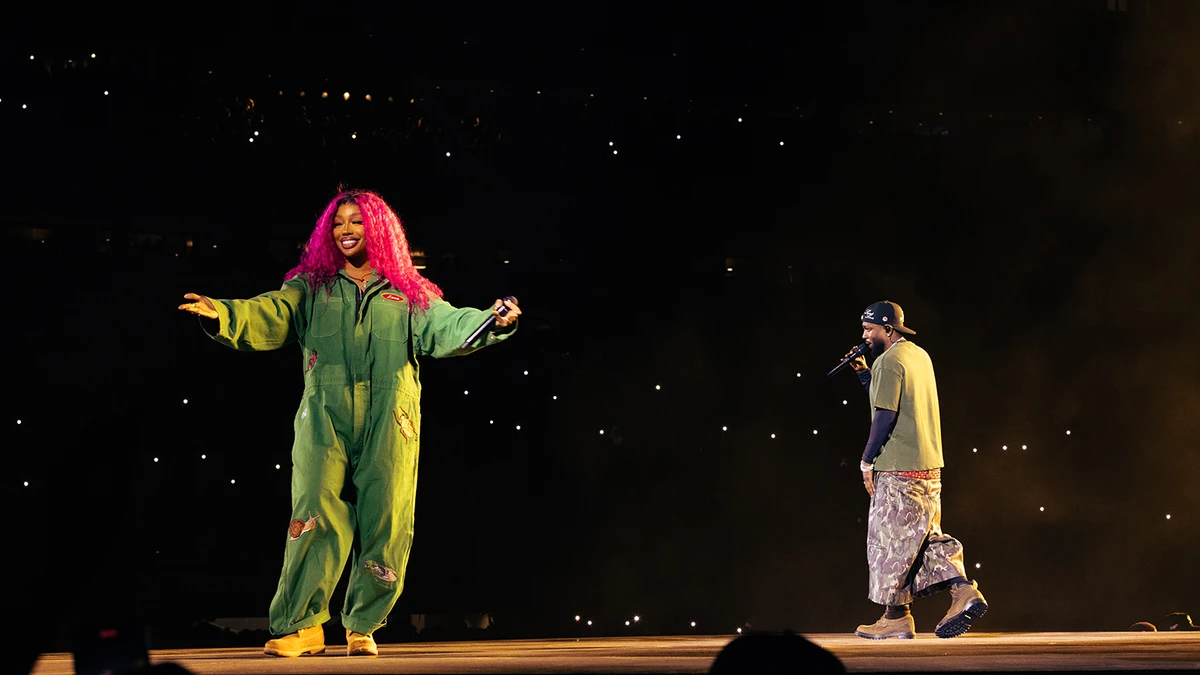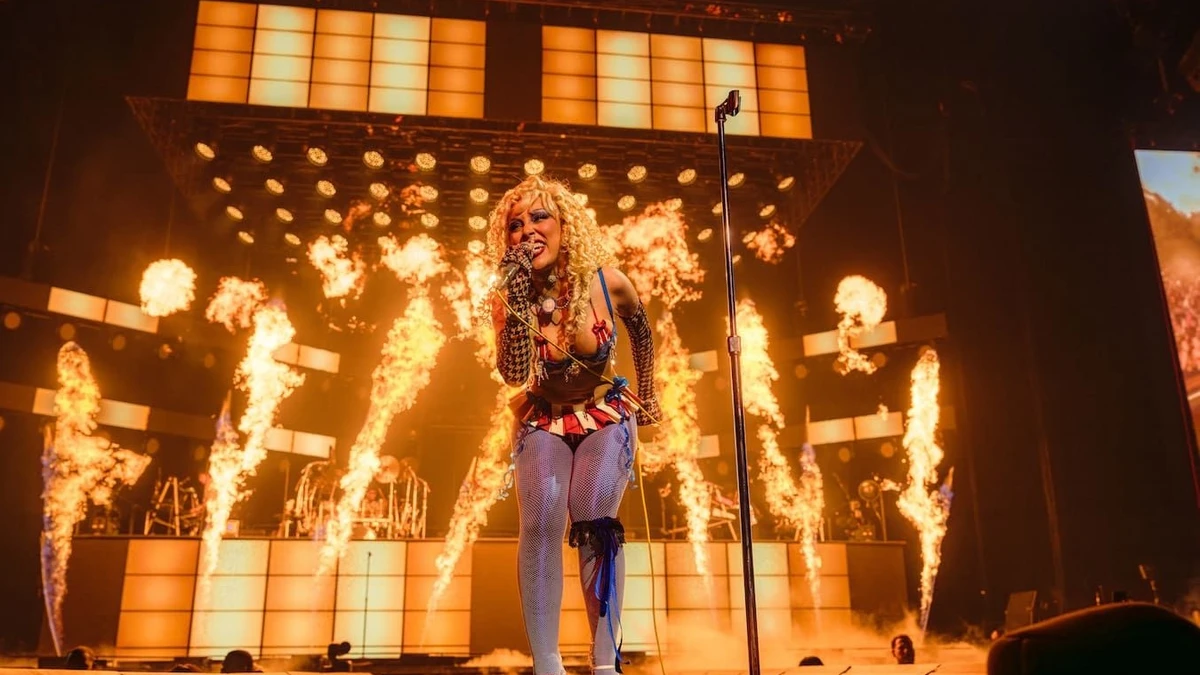

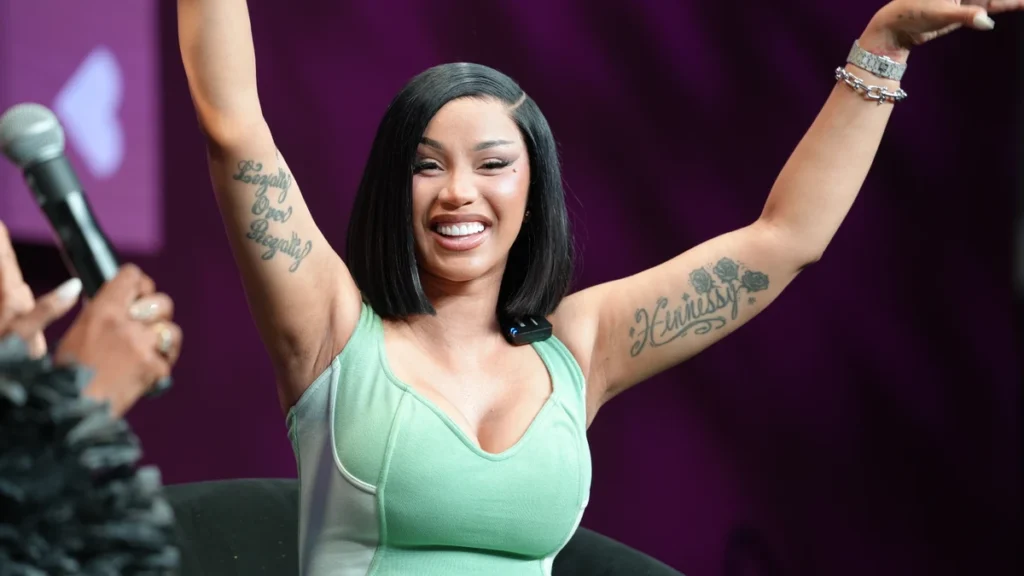
Cardi B at the 2026 Essence Festival of Culture.
Cardi B at the 2026 Essence Festival of Culture.
Cardi B AH HA arrived at midnight on Friday, 31 July, released through Atlantic Records and clocking in at just under three minutes. It is her first solo single of 2026, and the first piece of new music she has put out on her own since her second album landed the previous autumn. By the time it went live, most of the internet had already met it.
That is because the rollout ran backwards from the usual playbook. Instead of a press cycle, there was a phone camera, a beach, and four days of the song trending before anyone could stream a full verse. The record that followed is short, loud and unmistakably in her lane.
A Beach Teaser That Did the Marketing for Her
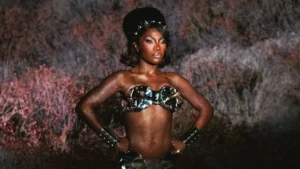
The first preview went up on Monday, 27 July, filmed while the rapper was on holiday in the Dominican Republic. The clip was straightforward: a walk along the sand, a bathing suit, and a snatch of an unreleased beat underneath it. It did not need a caption to work.
The numbers moved fast. The teaser pulled roughly 12 million views on X and close to 40 million on Instagram, putting the combined figure north of 50 million before a title had even been confirmed. A day later she went live on Instagram to walk fans through what the lyrics were actually about, and on Wednesday, 29 July, she posted the cover art with the release date attached. “AH HA out THIS FRIDAY at midnight,” she wrote, adding an invitation to “meet me at the club.”
The cover image is a still from the same holiday footage, which keeps the whole campaign inside a single visual idea. There was no radio edit trailed in advance, no feature announcement, and no album attached. For an artist with two Hot 100 chart-toppers already behind her, it was a notably low-cost way to open a release week.
What the Record Actually Sounds Like
The finished track is a club record first and a rap record second. Reviewers picked up on a strain of 1980s maximalism in the production, a digital bassline that squirms underneath the hook, and a rhythmic snap that owes something to Detroit. Stereogum described the result as the rapper “fully in her comfort zone, going in over a beat,” using the polish of the production to make a point about who is still standing.
She nods to that Detroit influence directly, shouting out the city’s Kash Doll on the track. Pitchfork’s read called it a “classic Cardi cut,” which is fair: the subject matter is money, longevity and the people who bet against her, delivered without much interest in subtlety.
The sharpest bar on the record is also the funniest, a two-line dismissal of an unnamed rival: “you bark pretty loud for a lapdog / To get this kinda house, you gotta sell your catalog.” Nobody is named anywhere in the song. The theme is success as revenge, aimed at a general audience of detractors rather than one target, which is a deliberate choice for an artist whose feuds usually generate more headlines than her release schedule.
The Producer Behind the Bounce
The beat comes from DJ SwanQo, and that pairing is the most telling detail on the credit list. He produced “Up” in 2021, which topped the Billboard Hot 100, and he also worked on “Get Up 10.” Both records share a structural logic with this one: a hard, uncluttered instrumental with enough space for the vocal to carry the entire song.
Writing is credited to the rapper, under her legal name Belcalis Almanzar, alongside James D. Steed. As of release, streaming services had not published a sample credit, so whatever the flip underneath the production may be, it has not been formally cleared into public view. The full single is available on Apple Music alongside the other streaming platforms.
Nine Months of Quiet, Broken on a Friday
The gap matters here. Her previous single, “ErrTime,” came out on 18 November 2025. Nine months passed before this one. In October 2025 she said publicly that she intended to have another project out inside a year, and this release lands just about inside that window.
The quiet was not idleness. Since the album she has appeared during Bad Bunny’s Super Bowl halftime show, performed on the 1000th episode of Saturday Night Live, reunited on stage with Megan Thee Stallion in Houston in March, and lent her platform to a free childcare initiative in New York City backed by mayor Zohran Mamdani. What she had not done was release a song on her own terms.
The Arena Run That Set This Up
Everything about the timing traces back to the album cycle that preceded it. Am I the Drama? arrived on 19 September 2025, a sophomore record that had been seven years in the making, and it went straight to the top of the Billboard 200. It carried two of the biggest singles of her career, “WAP” with Megan Thee Stallion in 2020 and “Up” in 2021, both of which had already topped the Hot 100.
The tour followed. Announced in September 2025, the Little Miss Drama Tour was her first headlining North American run, opening on 11 February 2026 in Palm Desert, California and closing on 18 April in Atlanta across 34 dates. The routing was not modest: two nights at Madison Square Garden, two at the Kia Forum in Inglewood, two at State Farm Arena, plus the United Center in Chicago, TD Garden in Boston and Chase Center in San Francisco.
An arena run of that size resets what a single needs to do. She is no longer chasing a first hit; she is holding a room she already filled. Contemporaries are working the same calendar in different ways, and the touring cycle has become the centre of gravity for rap’s biggest names, as Doja Cat’s own multi-market run this year made clear.
Release-week context helps here too. Standalone summer singles from established rappers tend to live or die on club and short-form rotation rather than first-week sales, and a sub-three-minute run time is built for exactly that. There is no feature to split the streaming credit, no remix trailed for a second news cycle, and no deluxe edition waiting in the wings. Whatever the record does over the next month, it does on the strength of the beat and the bars alone.
What Cardi B AH HA Signals for the Next Record
There is no album attached to this single, and no title has been floated. That is worth reading as intent rather than absence. A standalone club track released in the first days of August, with no feature and a producer she has taken to number one before, behaves like a temperature check rather than a lead single.
If it sticks on streaming and finds a second life in clubs through the back half of summer, the follow-up project has a lane to arrive in. If it does not, nothing is lost; it was never framed as a statement piece. That is the practical advantage of releasing a two-and-a-half-minute record with a beach video attached and no campaign budget riding on it.
What Cardi B AH HA does confirm is that the strategy still works. A phone, a beat and a holiday produced more pre-release attention than most fully funded rollouts manage, and the song underneath it was strong enough to survive the hype it generated. For a rapper nine months out from her last release, that is a clean return.
About Author